Tags
Blogroll
OVERVIEW
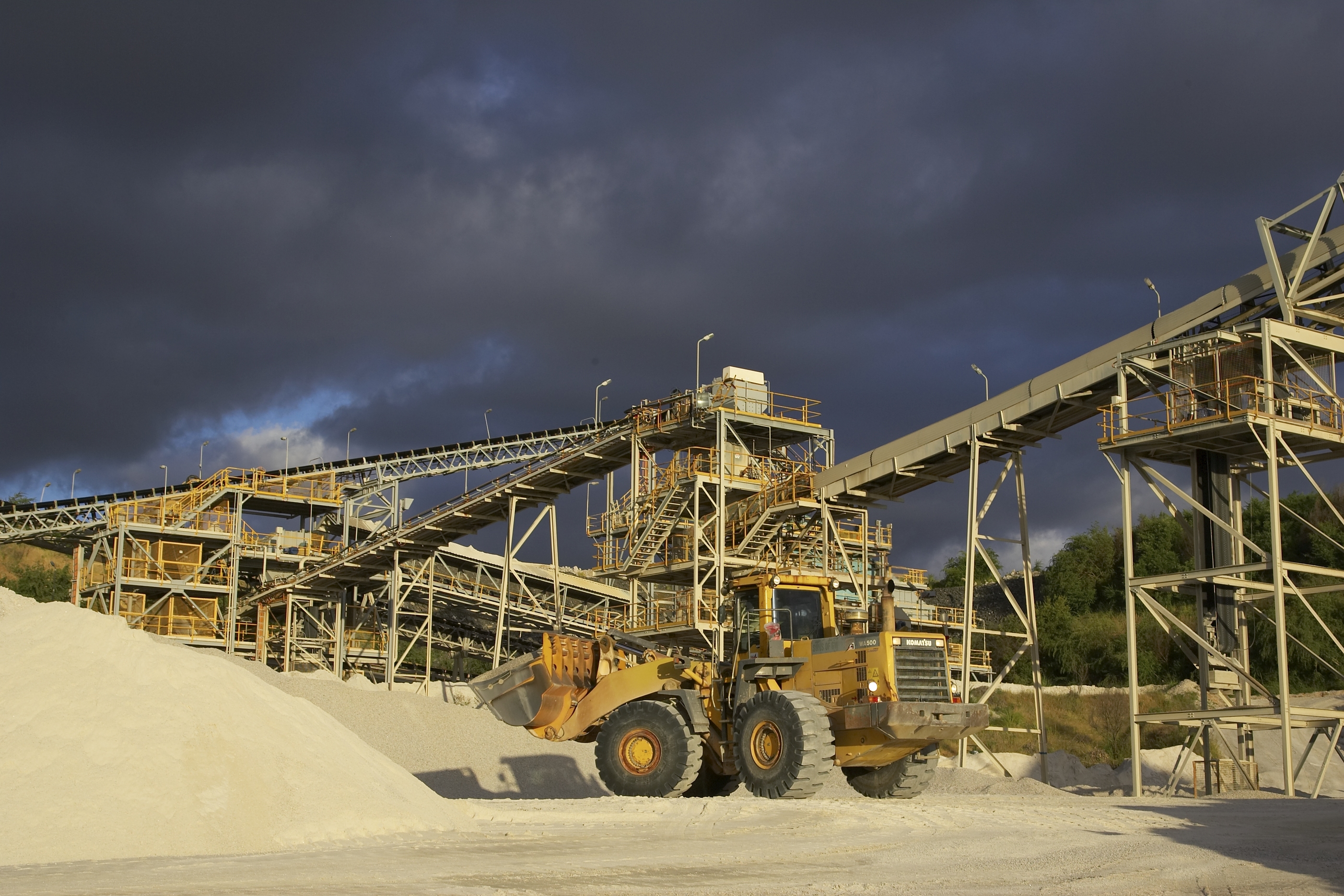
Lithium Excavation (Quelle: Talison Lithium)
What truth lies behind the debate on the scarcity of the raw material lithium, which is increasingly important for the battery industry? Time after time the future availability of the commodity is questioned – mainly under the premise that the market for electric vehicle will gain increasing importance in the mid-term. Moreover experts disagree about the accessibility of the remaining reserves worldwide. The three-part series of articles sheds light in the facts.
As a light metal, lithium is a very valuable raw material. It is the least dense and lightest solid element at room temperature. In addition, lithium has the highest electro-chemical potential of all metals.
Thanks to these special properties, it can be used in many different applications as a basic material for medications, as a raw material for the glass and ceramics industry, or as a medium for electric energy storage systems. In light of this, ensuring the supply is a major issue in the booming energy storage industry and an economic factor for the few countries that export the raw material.
Experts estimate that approximately 30 percent of the global demand for lithium originates from the electric storage industry. Despite a rapidly growing market volume on the whole, Roskill, a British market researcher in the raw material industry, expects this market share will increase up to 50 percent in the years ahead.
Lithium is one of the oldest elements in the universe. Lithium atoms were created in small amounts during the big bang. Ever since then the element has been generated during explosions on “dying stars”. In these supernovas, helium is synthesized from hydrogen atoms during nuclear fusion. If this helium is combusted, carbon and oxygen are generated. During this combustion process, small amounts of lithium atoms are produced as well.
Global reserves provide scope for increased production
The raw material is distributed very unevenly around the world. The highest concentration of lithium is found in primary deposits as a mineral in rock formation and in secondary deposits as underground brine and salt crusts on dried-out lakes. According to experts, the global lithium reserves which can be exploited at current raw material prices using modern technical means amount to roughly 14 million tons. In more optimistic assessments, the currently theoretically producible quantity is estimated at 30 million tons.
According to the U.S. Geological Survey, the worldwide production of lithium minerals and salts amounted to roughly 670,000 tons in 2012. Primary deposits served as the most important source for the extraction of lithium. A major part of approximately 450,000 tons originated from the excavation of Australian spodumine, which is considered to be the most important lithium mineral due to its relatively high lithium content. In 2012, the Talison mining company, which excavates these spodumine deposits in Australia, was the leading lithium supplier with a market share of 32 percent. Smaller quantities of spodumine were also excavated in China. On the other hand, the mineral amblygonite was excavated primarily in Zimbabwe.
Lithium-containing brines under the surface of the earth are another source of the material. These deposits are found mainly in South America, where about 100,000 tons of lithium were produced in 2012. The majority of the South American production originates from salt deposits in Chile. The salts are currently being excavated on an industrial scale in Argentina, too.
From the deposits, the mining companies extract lithium carbonate which can be transformed into a purer lithium product for use in battery cells during downstream production processes. Much larger quantities of the mined lithium carbonate are required to manufacture battery-grade lithium. The three major mining companies in South America are the American company Rockwood Lithium, the Chilean producer SQM, and the American supplier FMC.
Converted into lithium carbonate equivalents (LCEs), 130,000 tons were produced worldwide in 2012. As the most probable future scenario, the U.S. Geological Survey predicts that global lithium consumption will increase up to 190,000 tons in 2015 and even up to 280,000 tons by 2020. If this scenario proves to be true, the mining companies will have to expand their productions capacities considerably. Their focus lies especially on above ground salt deposits of silt up lakes.
In the second part of the blogpost, which will be released on November, 11 2014, I will show the main aspects, which are influencing the exploitation of these promising resources. Thereby the already advanced plans to exploit lithium at the Chilean salt lake Salar de Uyuni on a commercial scale will serve as an example.
I also edited this article for „ees International – The Electrical Energy Storage Magazine“, where it has also been published.
Related Posts
The service life of energy storage solutions depends not only on cell chemistry but also on external influences. Properties which are a must for rechargeable batteries in consumer electronics and mobile applications are less relevant in stationary batteries such as solar energy storage systems. Factors like ambient temperature, depth of discharge and cycle stability have… read more
