Tags
ZUR ÜBERSICHT
Die Zukunft der Energieversorgung gehört den erneuerbaren Energien. Da Erzeugung und Verbrauch nicht nur räumlich, sondern auch zeitlich auseinander liegen, steigt mit einem wachsenden Anteil der erneuerbaren Energien an der gesamten Stromerzeugung auch die Notwendigkeit den regenerativ erzeugten Strom zu speichern.
Es steht damit außer Frage, dass in diesem Bereich langfristig enorme Potentiale entstehen. Die rund 5.000 solaren Speichersysteme, die 2013 zusammen mit kleineren und mittleren PV-Aufdachanlagen installiert werden sind nur ein erster Schritt dieses Potential zu heben. Der Beitrag den diese kleinen Speicher zum „Projekt Energiewende“ leisten können ist begrenzt und man mag sich auch die Frage stellen, inwiefern die Installation solcher Speicher gesamtwirtschaftlich sinnvoll ist.
Dennoch gilt es festzuhalten, dass schon heute eine Nachfrage besteht und damit ein Markt existiert. Mit Blick auf diese Speichersysteme sprechen wir deshalb nicht über langfristige Potentiale, sondern einen bereits heute, real existierenden Markt.
Für 2013 rechnen Experten mit etwa 5.000 neu installierten Systemen. Damit werden gut 7 Prozent der 2013 installierten PV Systeme in den relevanten Größenklassen über einen Speicher verfügen. Die aggregierte Speicherkapazität dieser Systeme liegt bei rund 25 Megawattstunden. Bislang ist ein System aus PV Anlage und Speicher allerdings nur deshalb wirtschaftlich darstellbar, weil die PV-Anlage über die Einspeisetarife den Speicher quasi querfinanziert.
Der Speicherkunde verzichtet also im Bereich der Wirtschaftlichkeit, bekommt dafür aber ein Stück Autarkie in der Energieversorgung. Um künftig auch ohne diese „Querfinanzierung“ wirtschaftlich zu sein, sind weitere signifikante Preisreduktionen notwendig. Dies wird, nach allen derzeitigen Analysen, aber noch einige Jahre dauern. Es ist daher kaum überraschend, dass die Mehrheit der PV-Kunden in einer aktuellen Endkundenbefragung von EuPD Research eben diese hohen Preise als zentrales Hemmnis für die Installation eines Speichers nennt.
Diese Kostenreduktionen brauchen Zeit. Die Marktteilnehmer sollten sich aber schon heute die Frage stellen, welche weiteren Hebel – etwa in Form von aktiver Endkundenansprache und Aufklärung – möglicherweise existieren um die Nachfrage zu stimulieren.
Es geht nicht nur um den Preis
Seitens der Kunden bestehen nämlich auch wesentliche Bedenken hinsichtlich der technischen Reife der am Markt befindlichen Speicher. Speicher in Verbindung mit PV-Anlagen sind ein relativ „neues“ Produkt und die Bedenken der Kunden damit verständlich. Der Kunde muss überzeugt werden, das die Technologie hinreichend erprobt und ausgereift ist. Hier sollten die Hersteller die Installateure mit ihrer Nähe zum Endkunden einbinden, denn bislang nehmen die Installationsbetriebe diese Aufgabe der Aufklärung nur unzureichend wahr.
Weniger als die Hälfte der PV Kunden (45%), die 2013 eine Anlage installiert haben werden vom PV Installateur aktiv auf das Thema Speicher angesprochen. Mehr als zwei Drittel der Kunden, die nicht angesprochen werden würden sich jedoch wünschen, dass der Installateur aktiv auf sie zugeht. Diese Ansprache durch den Installateur ist dabei eine durchaus erfolgreiche Strategie. Die Erfolgsquote, gemeint ist die erfolgreiche Installation eines Speichers, liegt bei den Kunden die angesprochen werden bei immerhin 8,6% im Vergleich zu 4,9% bei den Kunden die nicht angesprochenen.
Rechnet man diese Zahlen auf den Gesamtmarkt hoch hätten sich 2013 bis zu 7.000 anstelle der nun erwarteten 5.000 Speichersysteme verkaufen lassen. Das entspricht einer Steigerung von immerhin 29%.
Bestandsanlagen – das unterschätze Segment?
Die Ansprache der Kunden durch den Installateur ist also einer der zentralen Hebel die Nachfrage zu stimulieren. Mit Blick auf die Neukunden, also all jenen, die 2013 eine PV-Anlage installiert haben, kommt der Installateur dieser Aufgaben in rund der Hälfte aller Fälle nach, bei den Bestandskunden liegt diese Zahl allerdings nur bei 22%, für die Installationsjahre 2011/12, beziehungsweise nur 10%, für die Installationsjahre vor 2011.
Doch auch in der Gruppe der Bestandskunden würden sich zwei Drittel der Anlagenbetreiber wünschen, dass der Installateur sie aktiv über den Einsatz von Solarspeichern informiert. Die in der Vergangenheit hohen Einspeisevergütungen, die bis 2011 deutlich über dem Strompreis gelegen haben, sind wohl einer der Gründe, weshalb Installateure diese Bestandskunden „außen vor lassen“.
Berücksichtigt man jedoch den Eigenverbrauchsbonus der Jahre 2009 bis 2011 und berechnet die entsprechende Wirtschaftlichkeit wird schnell klar, dass das Nachrüsten durchaus eine Option sein kann. Für die Kunden der Jahre 2009 bis 2011 ist die Installation eines Speichers aus wirtschaftlichen Gesichtspunkten ebenso rentabel – zumindest relativ gesehen – wie dies 2013 mit Berücksichtigung der Speicherförderung der Fall ist.
Mittelfristig ist in jedem Fall davon auszugehen, dass die Gruppe der Bestandskunden die wichtigere Zielgruppe sein wird. Aktuell werden jährlich etwa 70.000 PV-Anlagen in der für Speicher relevanten Größenklasse installiert. Diesen 70.000 neuen Anlagen stehen 2014 rund 550.000 Bestandsanlagen gegenüber, für 2016 ist sogar mit über 700.000 Bestandsanlagen zu rechnen. Wenn 2016 30% der neu installierten PV Anlagen mit einem Speicher installiert werden und im gleichen Zeitraum nur 3% der Bestandsanlagen nachgerüstet würden, wäre der Nachrüstungsmarkt absolut gesehen größer als der Markt für Neuanlagen.
Verwandte Artikel

Seit 1. Mai unterstützt die Bundesregierung die Anschaffung von Solarstromspeichern. Der Staat gewährt einen Zuschuss von bis zu 660 Euro pro Kilowatt installierte Leistung der Solarstromanlage. Wichtig ist: Die Förderung muss vor Anschaffung des Speichers über die Hausbank beantragt werden. Die staatliche Finanzspritze lohnt sich, denn dank der Batteriespeicher können Betreiber von Solarstrom-Anlagen den Anteil… weiterlesen
Energiespeicherung und Netzintegration sind zwei der zentralen Handlungsfelder für den weiteren Ausbau der solaren Stromversorgung. Denn der zunehmende Anteil von Solarstrom verändert das Stromnetz. Effiziente Energiespeicher werden bei der Lösung der aktuellen Herausforderungen eine zentrale Rolle spielen, zunächst über die Integration stationärer Energiespeicher in privaten Haushalten und im gewerblichen Umfeld. Zum einen ermöglichen Speicherlösungen einen… weiterlesen
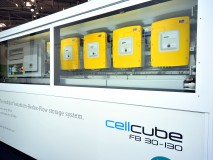
Die Photovoltaik wird bei der Energiewende nur dann eine tragende Rolle spielen, wenn Speicher Lasten verschieben, Regelleistung bereitstellen und ein intelligentes Energiemanagement ihren Einsatz koordiniert. Schafft es die Industrie, die notwendigen technischen Lösungen zu entwickeln? Im erneuerbaren Stromsystem hat das Stromnetz viele zusätzliche Aufgaben. Es müssen daher Lösungen entwickelt werden, die Schwankungen von Wind- und… weiterlesen

Kommentare (3)
Renewables Storage – The Next \”Whitegood\”
There are two distinct tracks materializing in the renewable’s industry, the first is the consumer driven rooftop solar market and the second is the large scale wind and solar markets driven primarily by investment firms looking to place their money with predictable results .Both have, and will continue to have variable challenges to deployment and long term financial returns.
The most significant and common factor between both camps is the dispatchability of renewables, the key conquering both technical and financial barriers to comprehensive deployment. The ability to produce and store electricity, then discharge this energy at key times me ans that peak demand can be reduced and in the medium term high import costs can be avoided.
In Germany, the impacts of particularly rooftop solar have only now become a significant burden on existing electrical infrastructure, in the main because of the huge amount of it. One place that has had technical issues since the solar boom begun is Australia. Ninety percent of Australia’s population is concentrated on a narrow strip of eastern seaboard, which is home to more than one and three quarter million roof-top solar systems. As far back as 2009, distributors were refusing connections based on voltage rise and reverse flow in their networks. At this time a small firm based in Queensland embarked on a cost effective method of time-shifting solar energy delivery based purely on overcoming the technical barriers preventing the installation of solar PV.
During this early stage state governments were offering extremely generous feed-in tariffs, which would encourage a customer to invest in whatever additional technology was necessary to gain access these tariffs. The challenge was to find a way of storing 5 or 10 kilowatt hours of energy to time shift into the evening peak, and gain distributor approval, at a cost that the customer could bear. In late 2010 the firm released it’s LifePo4 based system to what had become a completely changed market, the generous feed-in tariffs had suddenly disappeared, and the technical solutions now became a financial imperative.
Significantly this increased the potential market ten fold and co-coincided with the entry of a lot of offerings from storage companies such as Power Router and others. Unfortunately, most of the early offerings were way too expensive, and remain so for most domestic solar customers. The small firm in Queensland continued to refine it’s offering and without changing it’s initial design, has produced a true consumer solution to time shifting the delivery of renewables, primarily solar PV, at a fraction of the cost of other offerings. The key is mass production combined with the unique placement of the storage in the system. The units are connected directly to the output of the solar modules, through some very sophisticated but low cost buck-boosts DC-DC conversion at high voltages, the system can capture any amount of solar PV production and dispatch via the standard grid connect inverter, to achieve revenue and/or demand management objectives of the consumer.
The cost is the other winner, the units a re sold under a managed model, meaning the storage core is owned by the supplier and maintained and or replaced over an indefinite lifespan. Initial upfront costs are 3000 euros for the 5KWH unit and 5000 Euros for the 10KWH unit. In addition to this a 10% annual service charge is payable, covering scheduled maintenance, breakdown service and renewal of the core.
The inherent safety benefits of a high voltage/low current design means that the units can be installed anywhere within a domestic situation w ithout arc/gas or other restrictive factors coming into play. This article is meant to be informative rather than a marketing exercise. More information is available at http://www.sunsink.com.au. The device will be demonstrated at Intersolar 2014 in Munich.
Very interesting read as Norfolk Island has been very active in the installation of PV’s into the private home, so much that during peak sun periods too much excess PV is generated and passed back into the electricity grid thus making the electricity department having to install shedding devices to ensure that the system does not fail. This is not only a waste of renewal energy but does not bring down the cost of production as much as it should have. Norfolk Island at this time is actively attempting to establish whether or not a 5-10Mw storage system is avail, to alleviate the problem and to ensure that the PV generation of electricity is fully utilised within the grid. This has created such a problem that we have had to prohibit persons installing new systems until the problem is rectified. The sooner that large storage systems are available for this storage, the world (and Norfolk Island) can make use of its potential.
It is truly encouraging that we can now see momentum in this industry so that innovations can be multiplied, trickling down to the common man so that they can adopt green living as well. Thanks for publishing this!